Should You Buy a House With Poor Credit?
July 14, 2017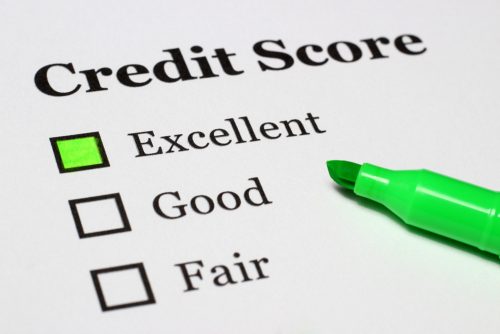 Credit Score Ratings and Their Impact on the Buying Process
If you believe that a below the market credit score should not be a problem, then you are wrong my friend. Because of low-interest rates, this may be the best time to buy a house. However, do not buy yet if your credit score is less than 620.
It is true that FHA can give you a loan even if your score is just 580, but did you ever think of the interest rates? A score of 580 and 850 can have a difference of $100k in between them. Are you willing to risk $100k in favor of a low FICO score?
I am sure you will not take that bet.
It is best to wait for a few months and improve your score before taking a housing loan. In the chart listed below, you will find credit scores and their corresponding mortgage rates. You will be able to see how much can you save just by improving your score a little bit.
Credit Score Ratings and Their Impact on the Interest Rates
Data Calculation Source: www.myfico.com
Median Value of a Single-Family Home (McAllen TX): $120k
Mortgage Terms: Fixed 30-Year Plan
Let’s plug these numbers into the FICO calculator and see the results.
| FICO Score | APR | Monthly Installment | Total Interest Rate Paid On the Life of Mortgage |
| 760-850 | 3.588% | $545 | $76,116 |
| 700-759 | 3.808% | $560 | $81,490 |
| 680-699 | 3.984% | $572 | $85,845 |
| 660-679 | 4.197% | $587 | $91,180 |
| 640-659 | 4.625% | $617 | $102,108 |
| 620-639 | 5.162% | $657 | $116,363 |
The difference between maximum and minimum scores can be a difference of $40k to your bank account. Remember, we are just discussing the median value of a single-family home. The interest rates rise exponentially when you move up in the buying spectrum.
A house worth between $350k-$500k will demand an extra $110k-$150k in interest rates if your FICO score is below the 760 mark.
Improve Your Credit Score and Plan for Mortgage Approval
Okay, now you know the effect of credit score on your mortgage terms. The question is how you are supposed to improve these numbers in as little as six months?
Here are the best steps for your case:
Pay Monthly Bills on Time
Monthly loan installments can increase or decrease your score by 100 points. Make sure that you pay all utility bills, credit card payments and any pending loans before the deadline. Stay consistent and request a new credit report after three months. There should be a visible difference in your scores.
Payment History
According to FICO, your payment history makes up the 35% of your credit score. It’s hard to change this calculation, but you can make a significant difference in 6 months. Do not close old credit cards. Submit your bills on time, make sure that all paid loans are included in your credit report. Do not eliminate paid mortgages or paid credit card debt from your report. Let them contribute to your payment history.
Reduce the Credit Utilization Rate
This step applies to credit card bills only. Your credit worthiness is calculated by this formula:
Utilized Credit/Available Money
This division creates your credit utilization rate. A higher rate means you are a spender whereas a low level indicates that you can handle credit cards well.
Gather 3 FICO Reports
You can request 3 free credit reports from Experian, Equifax, and the TransUnion. Order the reports and mark any differences in the details. Ideally speaking, all three reports should show you the same result, but this does not happen in real life. Most people get a low score because of defects in the credit report. Carefully, review the scores and report any errors or loans that are not listed.
You may need the services of a credit repair company. These companies have experience with common credit errors and their solutions. Be careful with this step. Many online companies charge a specific fee ($40-$90) for this service. Do not pay upfront and never allow a company to eliminate delinquent loans from your history. Doing so will hurt your credit rating, and at the later stages, your mortgage application can be rejected because of this action.
Do not Take a New Loan
It is important that you do not take any loans before buying your new house. A new debt will lower your score by several hundred points. It will be difficult to improve the situation unless you can strike a balance with your debt-to-income ratio.
A debt-to-income ratio indicates how much of your earnings are going toward debt payments. For mortgage approval, the ratio should be 10%-12% which will jump to 30%-43% after you get a housing loan.
Contact us now if you have any question or queries.
Disclaimer: These values & calculations are correct per author’s knowledge. Mortgage rates keep changing so; please refer to the up-to-date information and local housing agencies to make informed decisions when buying a house. Or give us a call at 956-884-4000
[Photo Credits: Photo by CafeCredit From Flickr Under CC 2.0
Excellent Credit Score Photo by CafeCredit Under CC2.0]